
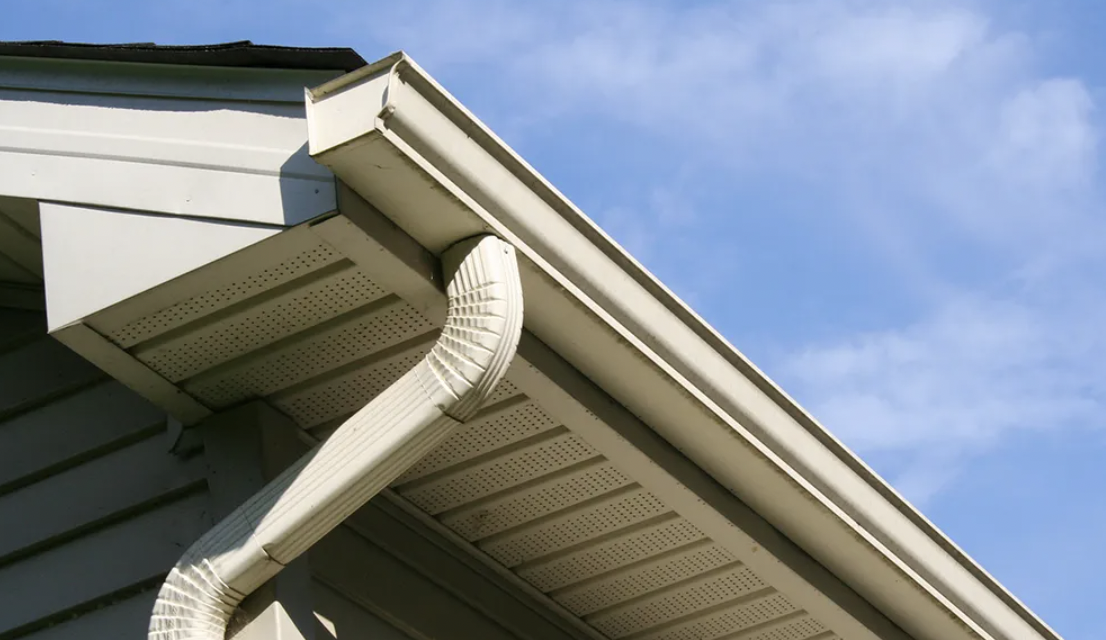
While gutters collect rainwater, downspouts direct it safely away from your property. Unfortunately, many homeowners ignore them until visible damage appears. When downspouts fail, water can silently harm your foundation, walls, and landscaping. Below are simple yet essential checks most people miss and how to ensure your downspouts perform correctly.
1. Ensure Water Moves Through Without Obstruction
Clogged downspouts remain the most common drainage problem. Leaves, dirt, roof granules, and debris can build up quickly. This causes water to accumulate and spill over the edges of the gutters.
How to check:
After rainfall, walk around your home. Look for water spilling over gutter edges or pouring from the top of the downspout. Additionally, use a garden hose to flush water downward. If water backs up, a blockage exists and needs removal.
Keeping downspouts clear prevents overflow and protects gutter integrity.
2. Verify Water Is Directed Away From the Foundation
Many downspouts release water too close to the house. This mistake can cause soil erosion, basement moisture, foundation cracks, and long-term structural damage.
Recommended standard:
Downspouts should discharge water at least four to six feet away from your home. If yours fall short, install extensions or splash blocks. These simple additions redirect water safely and reduce foundation stress.
3. Look Closely for Leaks and Weak Seams
Downspouts consist of multiple connected sections. With the passage of time, these joints may weaken, develop cracks, or even pull apart. Even small leaks can lead to wall stains, peeling paint, and siding damage.
Signs to watch for:
- Dripping water from seams during rain
- Rust marks or stains near the downspout
- Loose screws or visible gaps
Tightening fasteners or applying gutter sealant often resolves these issues quickly.
4. Check for Proper Position and Alignment
A properly installed downspout sits firmly against the wall and connects tightly to the gutter outlet. When alignment shifts, water may escape instead of flowing downward.
Common warning signs:
- Gaps between brackets and the wall
- Bent or dented sections
- Water running behind the downspout
Correct alignment ensures water travels smoothly through the system and away from your home.
5. Confirm Your Downspouts Are the Right Size
Older homes often have smaller downspouts that struggle during heavy rainfall. When capacity falls short, water overflows and causes damage.
Smart upgrade option:
Replacing 2×3 inch downspouts with larger 3×4 inch versions greatly improves water flow. Larger downspouts reduce clogging and handle stormwater more efficiently, especially in areas with frequent heavy rain.
6. Make Sure Everything Is Securely Fastened
Loose brackets and worn fasteners allow downspouts to move during storms. Over time, this movement leads to detachment or breakage.
Inspect mounting brackets regularly. Tighten loose screws and replace damaged supports promptly. A secure downspout remains stable and extends the life of your drainage system.
Why These Simple Checks Matter
Downspouts quietly protect your home every time it rains. However, small problems can escalate quickly if ignored.
By ensuring proper flow, secure placement, correct sizing, and adequate discharge distance, you strengthen your home’s first line of defense against water. These simple checks take little time yet deliver long-term protection and peace of mind.
Staying proactive today helps you avoid expensive surprises tomorrow.