
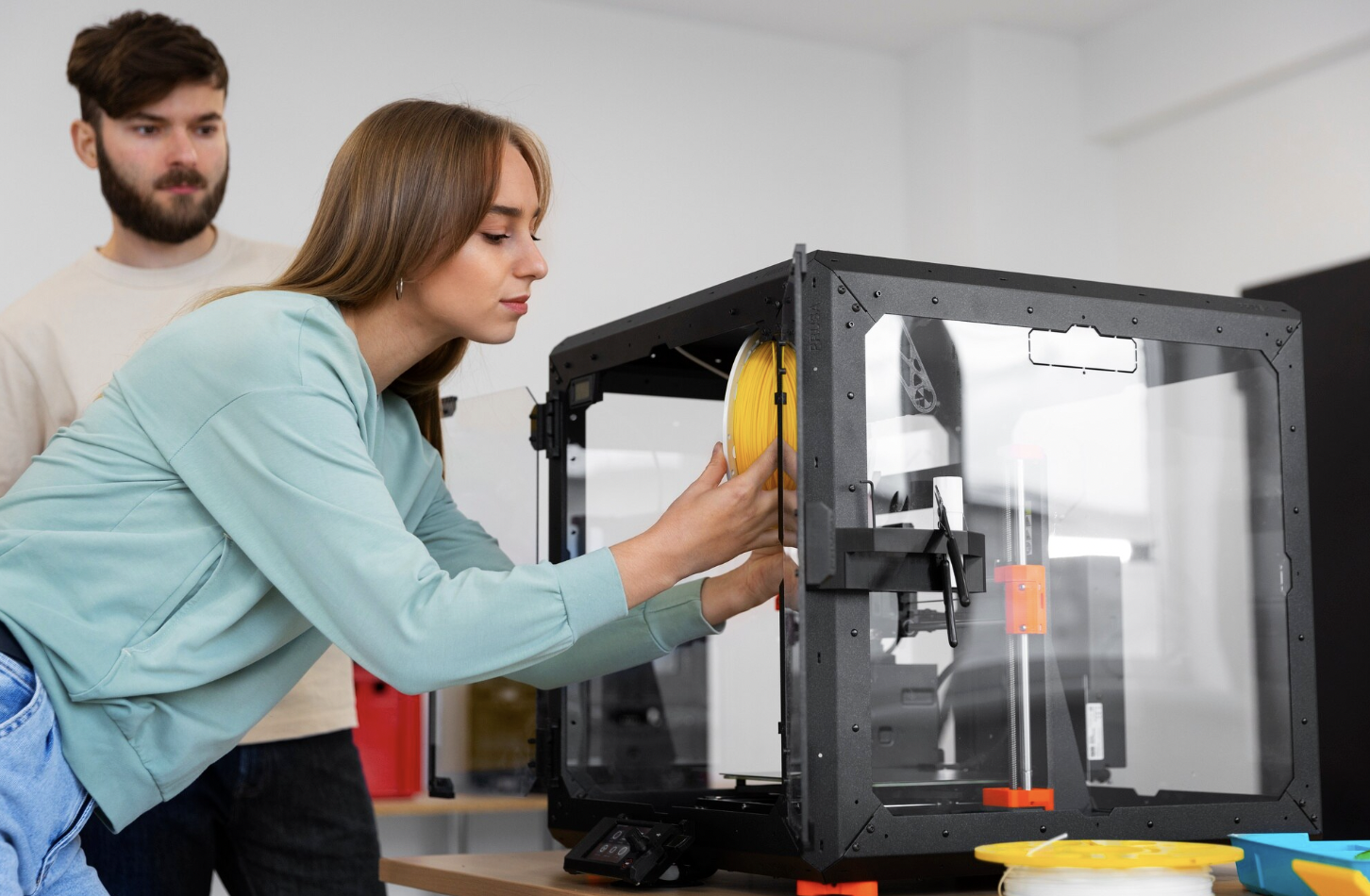
4D printing stands at the forefront of technological innovation, merging the precision of 3D printing with the responsiveness of intelligent materials. Unlike conventional additive manufacturing, which creates objects that remain unchanged after production, 4D printing introduces time as an additional dimension. This means that printed parts can alter their form, performance, or internal structure when exposed to environmental triggers such as temperature, humidity, light, or magnetic fields.
This transformation turns materials into active, self‑adjusting systems. From aerospace engineering to biomedical devices and consumer goods, 4D printing is shaping a new industrial era where products can adapt, respond, and evolve after they leave the printer.
How 4D Printing Works
Fundamentally, 4D printing combines adaptive materials with computational design and additive manufacturing. Objects are printed in layers using specialized equipment capable of handling smart materials. Embedded within these layers is a programmed memory that governs how the object responds when stimulated. Once activated, internal molecular or structural forces drive the intended movement, bending, twisting, folding, expanding, or contracting without any human intervention.
Core Elements of 4D Printing
- Responsive materials: Shape memory polymers, hydrogels, and liquid crystal elastomers are among the most common substrates that react predictably to environmental changes.
- External triggers: Heat, water absorption, pH levels, light, electricity, or magnetic influence set the transformation process in motion.
- Computational modeling: Advanced algorithms simulate future changes, allowing engineers to design specific motion sequences.
- Additive precision: Multi‑material printers lay down each layer carefully to ensure the programmed response works as intended.
The inclusion of controlled transformation separates 4D printing from static 3D manufacturing it is a design that continues to perform long after fabrication.
Materials That Enable the Transformation

Shape Memory Polymers (SMPs)
SMPs can be molded into a temporary shape and later revert to their original geometry when heated or exposed to a stimulus like light or water. This property makes them ideal for self‑assembling elements and medical implants that change configuration within the human body.
Hydrogels
Hydrogels can absorb high volumes of water and expand substantially. Engineers exploit this feature to create biomaterials that fold or stretch on cue, enabling innovations such as drug‑releasing capsules and responsive tissue scaffolds.
Liquid Crystal Elastomers
These materials pair elastic flexibility with molecular alignment. When exposed to light or heat, that alignment shifts, producing precise mechanical motion. Their application ranges from soft robotic actuators to adaptable clothing fibers.
Expanding Industrial Applications
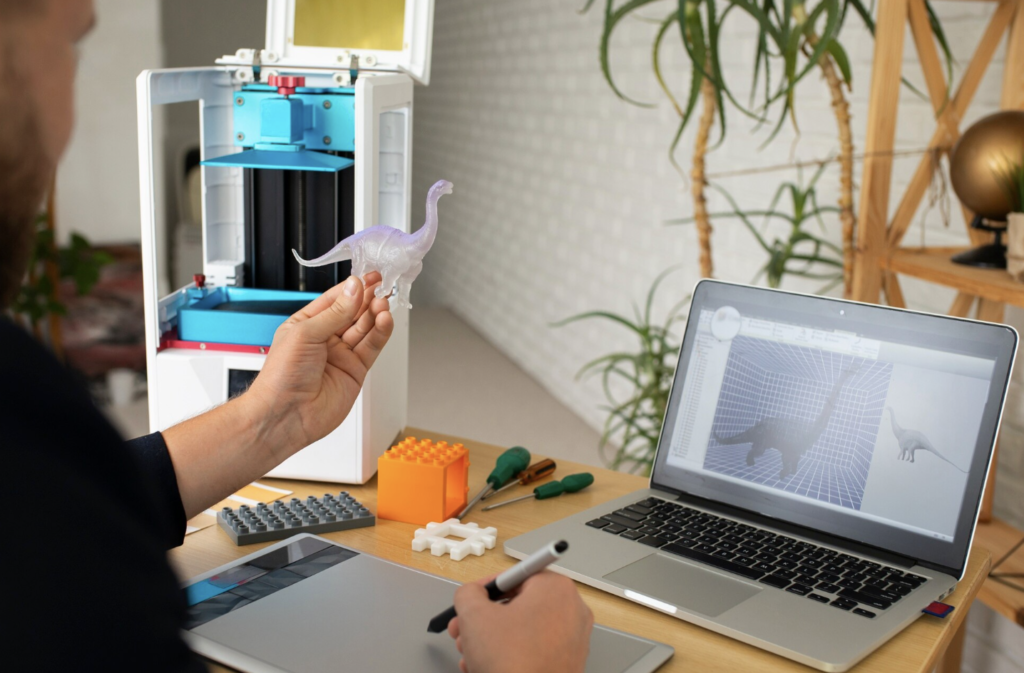
Medicine and Healthcare
4D printing opens new doors for patient‑specific treatments. Examples include implants that expand naturally at body temperature, prosthetics that automatically adjust to growth, and surgical tools that change form inside the body. Such innovations minimize surgical invasiveness and speed up recovery while improving long term performance.
Aerospace and Defense
In aerospace manufacturing, minimizing weight while maximizing adaptability is critical. 4D technology supports lightweight components capable of adjusting to flight conditions like morphing wings, heat responding cooling vents, or satellite parts that unfold once deployed in orbit. These features save fuel, reduce maintenance, and improve reliability.
Construction and Infrastructure
Buildings and infrastructure are beginning to benefit from adaptive materials that react to environmental change. Imagine self opening window panels for natural ventilation or water pipelines that expand automatically to handle pressure variations. Even self‑healing construction materials are being studied to reduce maintenance and extend durability.
Consumer Products and Fashion
In everyday life, 4D printing influences wearable design and smart products. Clothing that modifies insulation with body temperature, sport shoes that conform dynamically to movement, or gears that adjust stiffness in real time illustrate how customization and performance can merge seamlessly.
Advantages of 4D Printing
- Adaptive behavior: Products are no longer static but interactive with their environment.
- Simplified assembly: Components can self‑form, reducing manufacturing steps.
- Sustainable design: Self‑repairing or long‑lasting materials reduce waste and resource consumption.
- Expanded creativity: Engineers and designers can create complex, multi stage transformations unreachable through traditional methods.
How 4D Differs from 3D Printing
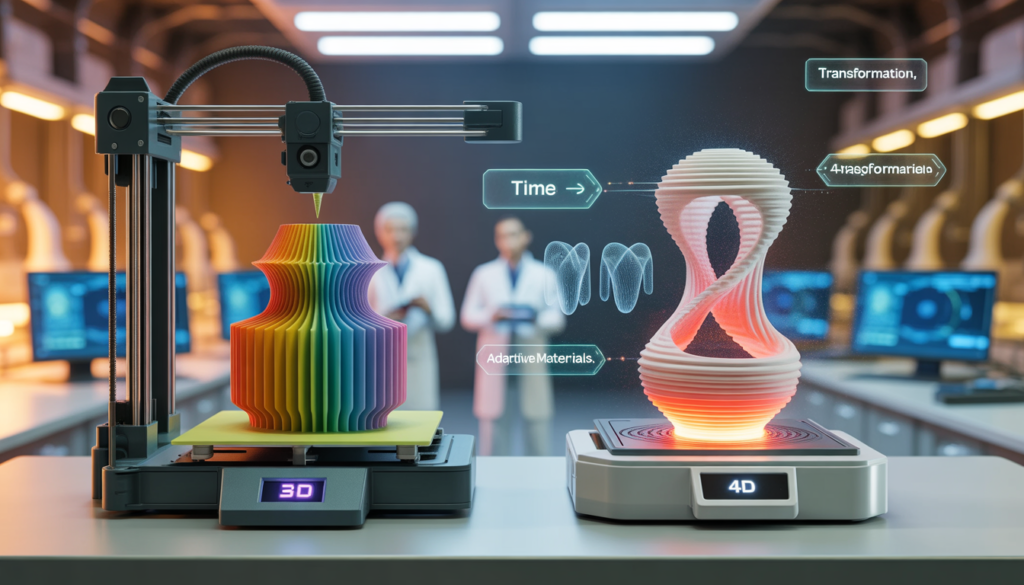
Both processes rely on additive manufacturing, yet their philosophies diverge. In 3D printing, an object is complete once printed. In 4D printing, the design lives in its materials, which are preprogrammed for movement or transformation over time. That extra layer of responsiveness marks the leap from fabrication to intelligent design.
Computational Precision and Digital Design
Predictable transformation depends on precise digital modeling. Engineers employ simulation tools and finite element analysis to forecast material responses, calculating fold angles, stretch limits, and activation thresholds. This digital accuracy ensures that when the real world trigger occurs, the printed object behaves exactly as designed.
Challenges and Current Barriers
Despite rapid progress, 4D printing faces practical constraints:
- Material performance: Many smart polymers remain experimental or costly.
- Production cost: Specialized printers and research‑grade materials make scaling difficult.
- Industrial scalability: Consistent mass production requires faster, more economical methods.
Continuous advances in material chemistry and process automation are steadily solving these problems, bringing widespread use closer.
Looking Ahead
The next stage of 4D printing will merge artificial intelligence, biotechnology, and nanoscience. Future innovations may include:
- Self‑healing materials that automatically restore integrity.
- Bio‑aware implants that react to patient physiology.
- Responsive infrastructure that adapts to temperature or vibration.
- Self‑assembling habitats for lunar and planetary missions.
Each breakthrough moves manufacturing toward a world where matter behaves intelligently.
Conclusion
4D printing pushes manufacturing beyond static production into an age of adaptability. By embedding information and responsiveness directly within materials, innovators can craft structures that evolve rather than simply exist. From morphing aerospace components to self shaping medical devices, it redefines how we design and interact with the physical world. As digital modeling, material science, and engineering continue to converge, 4D printing will stand as a catalyst for the next industrial revolution, an age in which the things we make will learn to respond, repair, and adapt alongside us.